

Florida is one of the most active cold chain markets in the country. With year-round heat and humidity, a massive food and beverage industry, proximity to Latin American import corridors, and a growing pharmaceutical sector, the demand for reliable temperature-controlled warehousing has never been higher. For brands and manufacturers looking to outsource cold storage to a third-party logistics provider, the stakes are significant. A poor fit can mean spoiled product, compliance violations, and broken customer relationships.
The good news: the right 3PL partner can make your cold chain a competitive advantage rather than a liability. But not every provider is built the same, and in Florida’s dynamic logistics environment, the details matter enormously. Before you sign a contract, here are the seven questions every brand should ask a prospective cold storage 3PL.
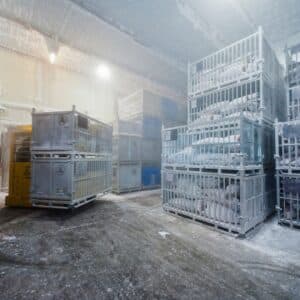
1. Are Your Facilities FDA-Registered and Third-Party Certified?
This is the non-negotiable starting point. Any 3PL storing food, beverage, pharmaceutical, or nutraceutical products in Florida should be FDA-registered and certified by a recognized third-party auditor. Look for certifications like ASI Food Safety, AIB International, or SQF (Safe Quality Food). They represent regular, unannounced audits and documented adherence to food safety protocols.
Florida-based providers operating under FSMA (Food Safety Modernization Act) requirements must maintain sanitation SOPs, employ a Preventive Controls Qualified Individual (PCQI), and keep detailed traceability records. With the FDA’s Food Traceability Rule (FSMA Section 204) moving toward full enforcement by July 2028, choosing a 3PL that’s already building its systems to comply is a meaningful advantage. Ask to see their most recent audit report, not just a certificate.
2. What Temperature Ranges Do You Support, and How Do You Monitor Them?
Cold storage is not one-size-fits-all. Frozen product (-10°F to 0°F), refrigerated goods (34°F–40°F), and ambient temperature-controlled inventory all require distinct infrastructure. A 3PL that only offers one temperature zone may not be a viable long-term partner as your product mix evolves.
More important than the range is the monitoring infrastructure behind it. Modern cold storage facilities use IoT sensors and cloud-based platforms that provide continuous, real-time temperature data with automated alerts when deviations occur. If a cooler malfunctions at 2 a.m., the right 3PL has already received an alert and dispatched a response—before your product is compromised. Ask specifically:
- How are temperature excursions detected and documented?
- What backup systems exist for power outages or equipment failures?
- Can clients access real-time temperature data through a portal or dashboard?
Transparency here is a strong signal of operational maturity.
3. How Many Florida Locations Do You Operate, and Where Are They?
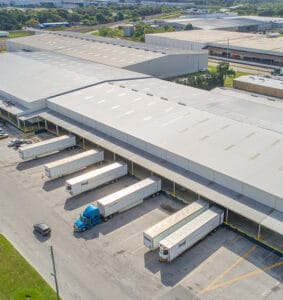
Florida’s geography creates real logistics complexity. A single-facility 3PL in Lakeland cannot serve Miami or Jacksonville markets with the same efficiency as a provider with distributed locations. For brands that distribute statewide or rely on Florida as a Southeast distribution hub, multi-facility coverage reduces transit times, lowers freight costs, and provides redundancy if one facility faces capacity constraints.
CWI Logistics, for example, operates 10 facilities across Central Florida, supporting brands that need to reach both the Gulf and Atlantic coasts efficiently. When evaluating a provider, map their facilities against your customer base. Empty miles are expensive—and in cold chain logistics, they’re also a product quality risk.
4. What Is Your Capacity Management Strategy for Peak Seasons?
Florida’s logistics calendar is uniquely intense. The holiday shipping surge, seasonal agricultural exports, snowbird-driven retail increases, and major port activity all create compression points that can strain cold storage capacity. A 3PL that’s at 95% utilization in October may not have room for your Q4 surge.
The best providers operate with a tiered capacity model—core owned assets, committed flexible capacity reserved for existing clients, and overflow arrangements for true demand spikes. Ask:
- What is your average utilization rate across cold storage facilities?
- How do you handle capacity requests from existing clients during peak months?
- Do you offer “pay-for-what-you-use” flexible agreements rather than rigid take-or-pay contracts?
A 3PL that can scale with your seasonal rhythm—without locking you into year-round commitments for peak-season capacity—is worth its weight in frozen inventory.
5. How Does Your WMS Handle Lot Tracking, FIFO, and Client Reporting?
The warehouse management system (WMS) is the operational brain of any cold storage facility. For food, beverage, and pharmaceutical clients, it needs to do more than track pallet positions. Lot-level traceability, First-In-First-Out (FIFO) rotation, expiration date management, and rapid recall response are baseline requirements—not premium add-ons.
Under FSMA traceability requirements, warehouses handling foods on the FDA’s Food Traceability List (FTL)—including fresh produce, seafood, cheeses, and ready-to-eat items—must maintain Key Data Elements (KDEs) tied to Critical Tracking Events (CTEs). A WMS that can generate this documentation quickly is essential for audit readiness and recall execution.
From a client experience standpoint, the best 3PLs provide portal access where you can view inventory levels, movement history, and compliance documentation in real time. This is not just a convenience—it’s a critical tool for managing your own upstream supply chain and customer commitments.

6. What Are Your Sanitation Protocols and Pest Management Standards?
In cold storage, sanitation is the foundation on which everything else is built. A facility that stores temperature-sensitive products correctly but allows cross-contamination risk through inadequate cleaning protocols has failed at the most basic level. Florida’s warm, humid climate makes pest pressure a year-round concern—not just a seasonal one.
Ask the prospective 3PL to walk you through:
- Their daily cleaning and scheduled deep-clean protocols
- How they handle sanitation documentation and PCQI oversight
- Their integrated pest management (IPM) program, including inspection frequency and entry-point sealing
- Whether their facilities are separated from non-food-grade operations to prevent cross-contamination
Reputable providers will have this documentation readily available and will not hesitate to share it. Hesitation here is a red flag.
7. What Does Your Contract Structure Look Like, and What Are the Exit Terms?
The operational questions matter most, but the commercial structure determines whether a 3PL partnership is sustainable. Cold storage contracts can be structured in many ways—monthly storage fees per pallet position, activity-based billing (in/out moves, picks), or hybrid models. None is inherently better, but misalignment between your actual usage pattern and the billing model can create unexpected cost inflation.
Pay particular attention to:
- Minimum commitments: Are you locked into paying for a minimum number of pallet positions even if your inventory drops seasonally?
- Rate escalation clauses: How and when can the 3PL adjust rates? Annual CPI adjustments are standard; uncapped mid-contract changes are not.
- Exit terms: What notice is required to terminate? What happens to your inventory during a transition? A 30-day out is very different from a 12-month lock-in.
- SLA definitions: Are service level agreements clearly defined, with remedies if the 3PL fails to meet them?
A transparent provider will walk you through these terms clearly and explain the rationale behind them. If a 3PL is vague about exit terms or resistant to SLA definitions, take that seriously.
The Bottom Line: Cold Storage Partners Are Long-Term Decisions
Choosing a cold storage 3PL in Florida isn’t a transactional decision. Temperature-controlled supply chains require deep operational integration, and switching providers mid-stride is costly, risky, and disruptive. Getting the selection right upfront—by asking the right questions and evaluating the answers carefully—protects your product, your customers, and your margins.
CWI Logistics has been operating temperature-controlled and ambient warehousing across Central Florida since 1966. With ASI Food Safety certification, HACCP-compliant facilities, multi-location coverage, and a WMS built for real-time visibility and traceability, CWI is built to serve food, beverage, and CPG brands that can’t afford cold chain failures.
Ready to evaluate your cold storage options? Visit www.cwi-logistics.com or contact the CWI team to discuss your requirements, tour a facility, and get a transparent picture of what a partnership would look like for your business.