

If you’re currently importing or looking to import goods from Mexico to Florida, you’ve probably felt the sting of those endless border delays. That’s why today, we’re diving deep into nearshoring logistics US-Mexico and how smart cross-border warehousing efficiency can slash those headaches. We’re talking real strategies to cut delays substantially, save on shipping costs, and keep your Florida warehouse humming. Let’s make your supply chain as smooth as possible.
What Is Nearshoring Logistics in the Context of US-Mexico?
Picture this: It’s 2023, and U.S. tariffs on China are biting hard. Enter nearshoring logistics US-Mexico—the smart shift of manufacturing and supply chains to Mexico, just a stone’s throw from the border. No more 30-day ocean voyages from Shanghai; we’re talking 2-3 days by truck from Monterrey to Miami.
Why’s it booming? The USMCA trade deal (that’s the new NAFTA) slashed duties on 99% of goods. Plus, Mexico’s got a skilled labor force, low wages (less than U.S. rates), and time zones that sync perfectly. For Florida importers—think auto parts, electronics, or fresh produce—it’s a game-changer. But, without robust cross-border warehousing efficiency, you’re still stuck in traffic jams at the border.

What’s An Example of a Nearshoring Client?
Here’s a hypothetical example: A Tampa electronics firm is moving assembly from Vietnam to Tijuana. Their old setup? 45-day delays. New one? Under a week. The secret? Warehousing magic we’ll unpack in the reading ahead.
The Border Bottleneck: Why Delays Are Killing Your Bottom Line
Let’s be realistic—crossing from Mexico to the U.S. isn’t a joyride. El Paso and Laredo ports see millions of trucks yearly. Add inspections, paperwork glitches, and weather, and 4-8 hour waits turn into days.
For Florida importers, it’s worse. Your goods trek 1,500 miles from the border to ports like Miami or Jacksonville. A single delay cascades: Perishable avocados rot, just-in-time parts idle factories, and you’re hemorrhaging $500+ per truck in demurrage fees.
But nearshoring logistics flips the script. By optimizing cross-border warehousing efficiency, you pre-clear goods, consolidate loads, and bypass peaks. Nearshorers can cut lead times significantly this way.

Cross-Border Warehousing 101: Your Efficiency Playbook
Cross-border warehousing efficiency means strategically placing storage hubs on both sides of the border. Think bonded warehouses in Nuevo Laredo (Mexico) feeding directly into Texas facilities. No unloading twice, no double-handling.
1. Pick the Right Spots for Maximum Speed
- Mexico Side: Nuevo Laredo or Ciudad Juárez—bonded zones where goods sit duty-free until export.
- US Side: El Paso or Laredo, then rail to Florida hubs like Orlando or Jacksonville.
Pro Tip: Use FTZs (Foreign Trade Zones). Florida has 18 FTZs—park goods in Miami without paying duties until you sell.
2. Tech That Actually Works
Ditch spreadsheets. Implement the following instead:
- Yard Management Systems (YMS): Real-time truck tracking. Cuts wait times significantly.
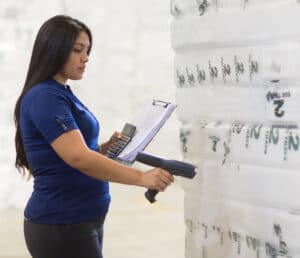
- RFID & IoT Sensors: Scan pallets instantly at borders.
- AI Forecasting: Predict customs holds using CBP data APIs.
The Philosophy of Cross-Border Efficiency in Florida & Beyond
At its core, nearshoring logistics between US-Mexico embodies a profound shift in supply chain philosophy—from distant, fragile networks to proximate, resilient ecosystems. Cross-border warehousing efficiency serves as the bridge, harmonizing the flow of goods across invisible lines. Drawing from systems theory, it treats the border not as a barrier, but as a dynamic interface where preparation meets opportunity. Industry thought leaders emphasize that true efficiency arises not from speed alone, but from the elegant alignment of foresight, technology, and partnership—principles that transform potential chaos into orchestrated flow.
For Florida importers, this manifests as a strategic embrace of geographic proximity. Warehousing becomes more of a qualitative practice: storing not just goods, but time itself, allowing perishable harvests or precision components to traverse the 1,500-mile corridor with efficiency.
Navigating Complexities: Theoretical Frameworks for Resilience
Nearshoring logistics US-Mexico invites contemplation of enduring challenges through established theoretical lenses, each with principled countermeasures.
- Regulatory Harmony: USMCA’s rules of origin demand a North American essence in traded goods. Framework: Adopt a cyclical audit philosophy, inspired by continuous improvement models, to ensure seamless compliance without rigidity.
- Flow Disruptions: External forces, such as labor dynamics, can interrupt the supply rhythm. Framework: Embrace diversification doctrine—blending truck and rail pathways to cultivate adaptive redundancy, much like ecological systems that thrive on variety.
- Pathway Integrity: Regional uncertainties call for vigilant stewardship. Framework: Pursue trusted trader paradigms (e.g., C-TPAT), which elevate operations to a higher plane of expedited trust, reducing friction through pre-validated flows.
Florida’s I-4 corridor exemplifies this resilience, its expanding warehousing landscape serving as a theoretical canvas for scalable, interconnected operations.

A Seven-Step Contemplative Framework for Implementation
To realize cross-border warehousing efficiency, engage this reflective framework, rooted in strategic planning traditions:
- Audit with Intention: Map your supply chain’s essence using accessible tools, revealing hidden currents of delay.
- Envision Strategic Nodes: Contemplate key hubs like Laredo through digital explorations, aligning geography with purpose.
- Integrate Enlightened Tools: Introduce systems for real-time insight, fostering a technology-infused awareness.
- Attain Trusted Status: Pursue certifications as a rite of passage to streamlined pathways.
- Forge Alliances: Seek symbiotic partnerships with logistics experts, like CWI Logistics, co-creating shared efficiencies.
- Initiate Mindful Trials: Pilot with a single stream, observing flows with disciplined curiosity.
- Evolve Through Reflection: Monitor and refine cyclically, nurturing ongoing harmony.
Florida’s Edge in US-Mexico Nearshoring Logistics with CWI Logistics
Florida importers: Ready to streamline your nearshoring logistics, US-Mexico, with proven cross-border warehousing efficiency? Contact CWI Logistics today for a free supply chain audit and personalized implementation plan—cut delays and boost your bottom line in weeks.
Reach out to us today!