

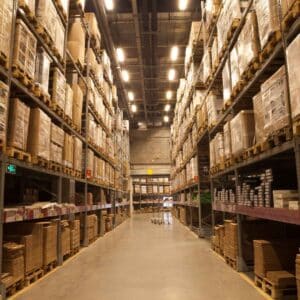
What Does the Contract Warehousing Process Look Like?
A contract warehouse, often operated by a third-party logistics provider (3PL), follows a structured process to manage goods for a client under a fixed-term agreement. Here’s the basic step-by-step process:
Contract Agreement and Setup
The process begins with a formal contract between the client (e.g., a manufacturer or retailer) and the 3PL provider, like CWI Logistics. The contract specifies the duration (months to years), pricing structure (fixed, cost-plus, or hybrid), and services required, such as storage, handling, or fulfillment.
The warehouse allocates dedicated space for the client’s goods, ensuring exclusivity unlike public warehousing. For example, CWI Logistics might dedicate a specific area for your inventory, tailored to your needs (e.g., temperature-controlled storage for perishable goods).
Receiving Goods
Goods are delivered to the contract warehouse, where they are received by trained staff. The warehouse verifies the shipment against the contract terms, checking quantities, condition, and specifications.
For instance, CWI Logistics handles this step with employees who follow OSHA standards, ensuring proper documentation, especially for imports/exports.
Storage and Inventory Management
Goods are stored in the designated area, which may include specialized zones (e.g., dry storage, refrigerated areas for perishables, or HAZMAT sections). The warehouse uses inventory management systems to track items, often employing technologies like RFID to minimize errors.
CWI Logistics provides real-time inventory tracking, allowing you to monitor stock levels and locations, reducing the risk of stockouts.
Value-Added Services
Beyond storage, the warehouse may perform additional services per the contract, such as kitting, labeling, packaging, or quality control checks. For example, CWI Logistics offers cross-docking to speed up distribution or value-added packaging to streamline your operations.
These services are tailored to the client’s needs, enhancing efficiency without the client managing these tasks directly.
Order Fulfillment and Shipping
When orders are received, the warehouse handles picking, packing, and shipping. Staff ensure timely fulfillment, often using advanced systems to optimize the process and meet service level agreements (SLAs).
For a company like CWI Logistics, this step often involves coordinating local transportation or managing international shipping, ensuring compliance with export regulations.
Are you getting the most out of your contract warehousing experience? The benefits of contract warehousing include lower costs, lower capital investment, and guaranteed service and reliability. In other words, when you hire us for your contract warehousing solutions, we take on the management of warehouse operations and allow you to focus on manufacturing.

GET STARTED TODAY
Trust CWI Logistics For All Your Contract Warehousing Needs
Contract warehousing with CWI allows you to simplify your operations as your company expands. As your company grows, you will tend to be pulled in numerous directions. When your operations become increasingly more complex, we begin to thrive and do what we do best. At CWI, as a third-party logistics (3PL) company, we remove the headache when you leave your warehousing and logistics to us.
What Are the Benefits of Contract Warehousing?
As you consider a contract warehouse, here are some factors to think about.
- Low Upfront Costs – Our contract warehouse solution takes capital costs from the equation, such as construction and maintenance costs. The facility already exists, and you can move right in. It’s scalable warehousing at its finest.
- Trained Staff – Experienced employees in all facets of warehouse work, including OSHA standards.
- Quality Assurance – Your goods, whether they’re dry or temperature-controlled, are maintained by our high-quality staff in our high-quality facilities.
- Inventory Management Services – Maintaining proper inventory is integral to your business.
- Centralization – If you’re not located where your customers are, our contract warehouses can help increase your geographic flexibility.
- Advanced Logistics – We offer the ability to track a product’s location and utilize a wide range of intermodal transportation options.
- Transportation – Providing multi-mode transportation services via an extensive network of affiliated asset-based providers.
- EDI – Electronic Data Interchange order transmission capabilities.
The contract warehouse advantages and disadvantages can be further explored in one of our previous blog articles.
Contract Warehousing Frequently Asked Questions (FAQs)
1. What Does the Contract Warehousing Process Look Like?
The contract warehousing process involves a structured approach where a business outsources its warehousing and logistics needs to a third-party provider under a contractual agreement. Here’s a general outline of the process:
- Needs Assessment: The business evaluates its warehousing requirements, including storage space, inventory management, and distribution needs. This involves analyzing product types, volume, turnover rates, and specific handling requirements (e.g., temperature control for perishables).
- Provider Selection: The business researches and selects a contract warehousing provider, such as CWI Logistics, based on factors like location, capabilities, technology, and cost. This may involve RFPs (Request for Proposals) or negotiations to align services with business goals.
- Contract Negotiation: A detailed contract is drafted, specifying terms like duration (typically 1-5 years), pricing, service level agreements (SLAs), responsibilities, and performance metrics. This ensures clarity on expectations for both parties.
- Onboarding and Setup: The provider sets up the warehouse to accommodate the client’s inventory. This includes configuring storage systems, integrating inventory management software, and establishing processes for receiving, storing, and shipping goods.
- Inventory Management: The warehouse provider handles day-to-day operations, including receiving shipments, storing goods, picking and packing orders, and managing inventory levels. Advanced providers use technologies like Warehouse Management Systems (WMS) for real-time tracking.
- Distribution and Fulfillment: The provider manages order fulfillment, including picking, packing, and shipping products to customers or other destinations. This may include value-added services like kitting, labeling, or customized packaging.
- Performance Monitoring: Regular reports and KPIs (e.g., order accuracy, delivery times) are shared to ensure the provider meets agreed-upon standards. Periodic reviews may occur to optimize operations.
- Continuous Improvement: The provider and client collaborate to identify inefficiencies, implement process improvements, and adapt to changing business needs, such as seasonal demand spikes.
2. What Are the Benefits of Contract Warehousing?
CWI Logistics is a third-party logistics (3PL) provider specializing in contract warehousing and related services. While specific details about their processes may require direct contact, here’s why businesses might trust CWI Logistics based on typical industry practices and available information:
- Expertise and Experience: CWI Logistics likely has extensive experience in warehousing and logistics, offering tailored solutions for industries like retail, manufacturing, or food and beverage. Their expertise ensures efficient handling of complex supply chain needs.
- Advanced Technology: Reputable providers like CWI typically use state-of-the-art Warehouse Management Systems (WMS) and automation to streamline operations, reduce errors, and provide real-time inventory visibility.
- Scalability: CWI Logistics can scale services to accommodate fluctuating demand, such as during peak seasons, ensuring businesses avoid overpaying for unused space or struggling with capacity constraints.
- Customized Solutions: They likely offer value-added services like kitting, cross-docking, or specialized storage (e.g., cold chain for perishables), tailored to client needs.
- Reliability and Trust: As a professional 3PL, CWI Logistics emphasizes reliability, with SLAs ensuring high performance in order accuracy, on-time delivery, and inventory management.
- Cost Efficiency: By outsourcing to CWI, businesses can convert fixed warehousing costs into variable costs, paying only for the space and services used.
Contact CWI Logistics for Contract Warehousing in Florida & Beyond
We can operate inside your location with trained professional staff to apply best practices at cost-efficient solutions. A contract warehousing solution with CWI Logistics will work hard to help you continue to achieve success.
Reach out to us today so we can help you with all of your contract warehousing needs throughout Florida and the Southeast.